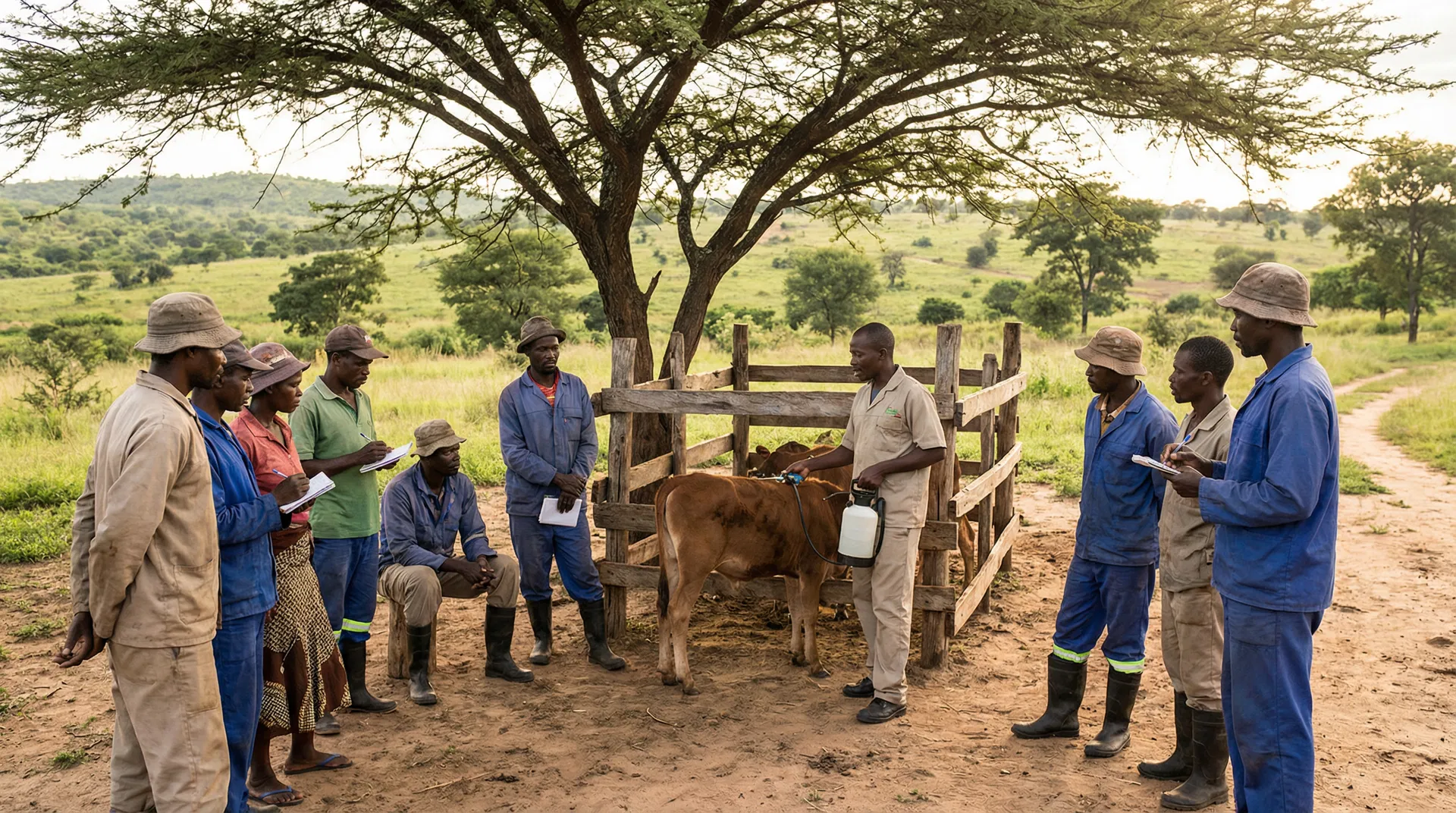
Protect Your Herd.
Grow Your Knowledge.
Zambia Tick Season Calendar
Tick pressure varies throughout the year. Plan your dipping schedule around the seasons.
Rainy Season
Nov – Apr
Peak tick activity. Warm, humid conditions accelerate tick breeding. Dip every 5–7 days. Use Alphatraz 250 or Alphacyp 20 for heavy infestations.
Recommended Products:
Hot Dry Season
Aug – Oct
Tick populations remain active in warm areas. Continue regular dipping every 7–14 days. Pour-ons are effective for smaller herds.
Recommended Products:
Cool Dry Season
May – Jul
Reduced tick activity but don't stop treatment. Extend intervals to 14–21 days. Good time for pour-on treatments.
Recommended Products:
Practical Guides
How to Dip Your Cattle Correctly
Prepare the dip solution according to the product label — do not guess concentrations
Ensure the dip tank is clean and the solution is fresh
Walk cattle through slowly — each animal must be fully submerged for at least 30 seconds
Allow cattle to drip-dry in a clean holding pen before returning to pasture
Record the date, product used, and number of animals treated
Top up the dip tank after every 50–100 animals (follow product instructions)
How to Apply Pour-On Products
Restrain the animal safely in a crush or head clamp
Part the hair along the backline from the poll (between the horns) to the tail head
Apply the correct dose evenly along the backline using the applicator
Do not apply to wet animals or if rain is expected within 6 hours
Dose according to the animal's estimated body weight — do not underdose
Record the treatment date and product used for each animal
Signs of Tick-Borne Disease
High fever (above 40°C / 104°F) — animal is listless and off feed
Red or dark-coloured urine (redwater / babesiosis)
Pale or yellow mucous membranes (anaplasmosis / gallsickness)
Swollen lymph nodes, especially around the ears and neck
Sudden drop in milk production in dairy cattle
If you see these signs, contact a veterinarian immediately — early treatment saves lives
Frequently Asked Questions
Need Expert Advice?
Visit your nearest Agriserve Agro branch for personalised livestock health advice from our trained team.